Are you stalling or percolating?
I've taken 20 years to write 1 book, and I've written a 5-book series in 4 years. I've even written a book about how I made that shift using fun techniques. (CLICK BELOW for a free copy) But not every writing delay comes from a lack of technique or discipline.
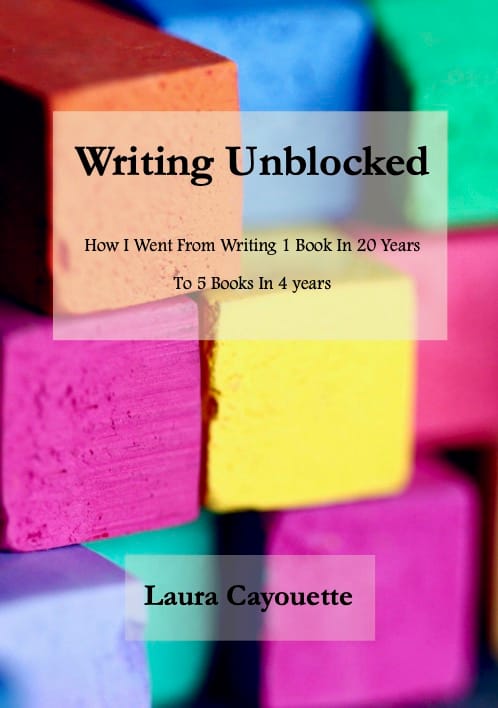
Get a subscription to the Writing Unblocked Newsletter and get the Writing Unblocked ebook as my gift to you!
Stalling
The verb form of "stalling" can be defined as delaying or preventing something or someone from making progress. This definition implies that you are the reason progress isn't happening.
Stalling can also mean "to stop progressing or developing," or "to bring to a standstill." In other words, stalling can mean quitting.
These questions might help you identify if you're stalling:
- Do you only work on your project when you feel like it?
- Do you wait for inspiration to work on your project?
- Have you made efforts to continue working on some part of your project before deciding to wait for better timing?
- Do you know where you'll pick up when you go back to the project?
- Are you still interested in telling this story? Are you passionate?
If you're still passionate about your project and you know where it's all heading once you get back to it, you probably just need a moment to deal with life. You might even be percolating.
But if you only work on your project when you feel inspired – and the story no longer inspires you – you might need to rethink whether you're willing to spend months-to-years bringing it to fruition.
If you only work on your project when you feel inspired but you're still in love with your story, you probably need to take a look at your work habits. Part of what took 20 years to write my first novel, Lemonade Farm, was that I had no idea HOW to write a novel so I spent a lot of time treading water, unsure how to move forward. I got a master's degree in creative writing and English literature to help build my writing skills, but graduated still uncertain how to turn notes, stories, and memories into a novel. Whether you read my book or someone else's, take classes, or seek coaching/mentorship – find tools that help you move from ideas to drafts.
Get a subscription to the Writing Unblocked Newsletter and get the Writing Unblocked ebook as my gift to you!
Another definition of stalling is to delay taking action in order to have more time to make a decision or get an advantage. Which brings us to...
Percolating
Unlike stalling, percolating is more deliberate. The Latin root means to put through a sieve. Percolate can also mean to spread gradually, and my favorite, "to become lively or effervescent." I think of it as ripening – moving from one state to another over a period of time.
When you're percolating, you never forget the eventual goal – but you're allowing the process to take time.
These questions might help you identify if you're percolating:
- Do you work on your project because you can't stop?
- Do you wish you had more time for your project but do your best?
- Do you make efforts to continue working before deciding to wait for better timing?
- Do you know where you'll pick up when you go back to the project?
- Are you excited to get back to work on your project as soon as possible?
Sometimes life gets in the way (and occasionally I give myself a night off) but I always know where I am in my projects and I only take on projects I care about in an energizing way.
The importance of downtime
If you're stalling, it might be time to take a step back and look at your ideas. This post can help clarify your ideas and pinpoint your passion.
 Laura Cayouette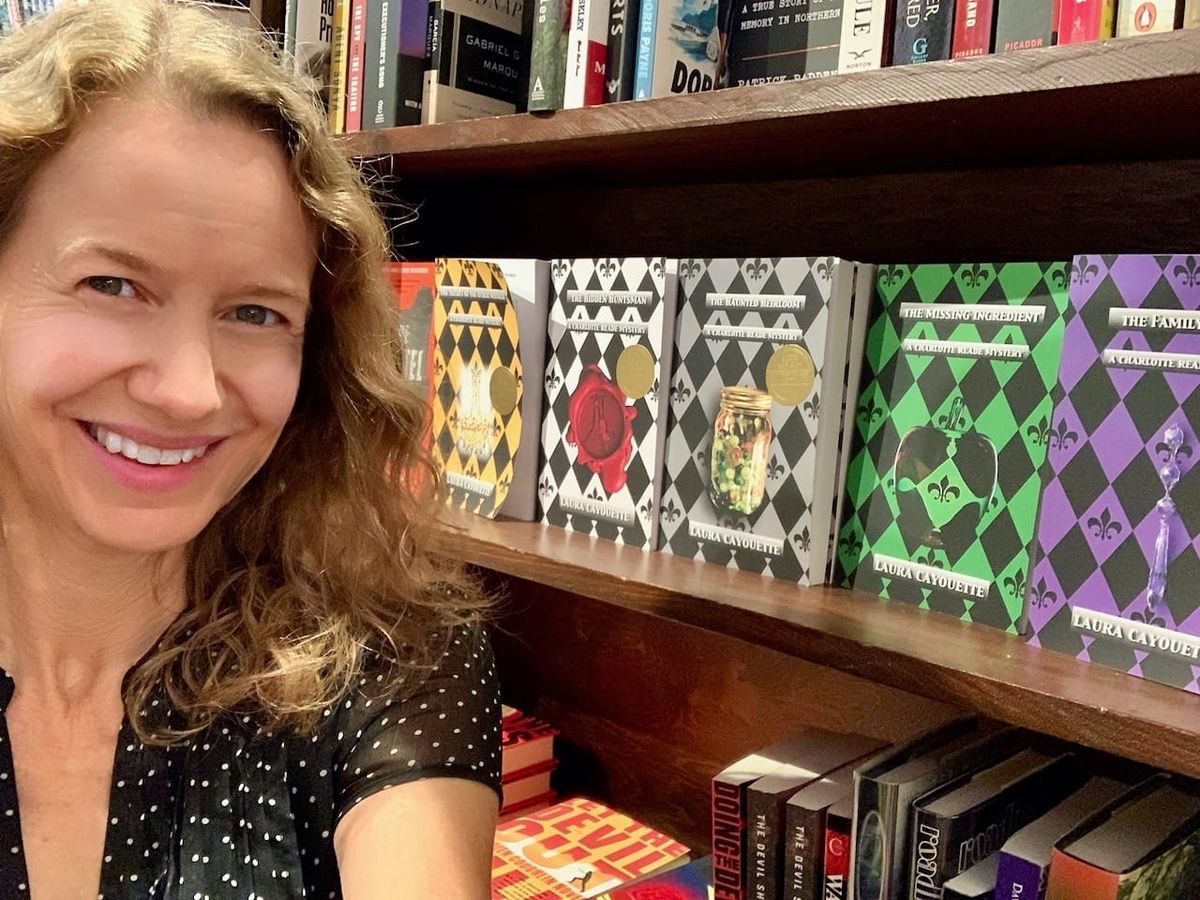
If you're percolating, downtime can be time well spent. As I said before, some of my time delay for Lemonade Farm was getting more education to build my confidence and skill set. Downtime can also be used for research, traveling to locations, interviewing people and other information gathering.
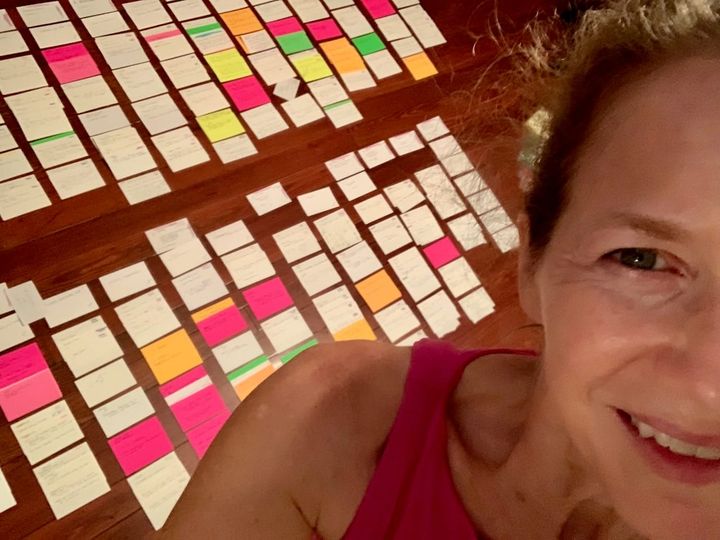
I took a month off after finishing chapter 6 (of 12) of my current book so that I could do some "housekeeping." I needed to go through all my chapters and my notes. I organized my new ideas. I checked through-lines, logic, and reveals. I looked at character arcs and plot progression.
I'll be honest with you, that month got stretched into almost 3 when I ended up shooting back-to-back out-of-town movies and I still hadn't finished organizing all of my materials. I thought of finishing that task – especially knowing how often I refer to my notes while writing, and how time consuming it can be to hunt for things. But I also missed actually writing. I missed traveling the world at my desk. I missed watching my characters do stuff. I missed feeling it all come to life. So I went back to writing.
I wasn't ready
There are many reasons Lemonade Farm took 20 years. One of them is I had to wait to become the person who could tell that tale well. It's the same story with my current book, The Source. There's a long backstory, but the idea for The Source was born in 2005 when I first wrote it as a (better in my head) screenplay. But the adventure was far too long and elaborate for a 2 hour movie, and the script reflected that. So in 2008, I started converting the script to a novel.
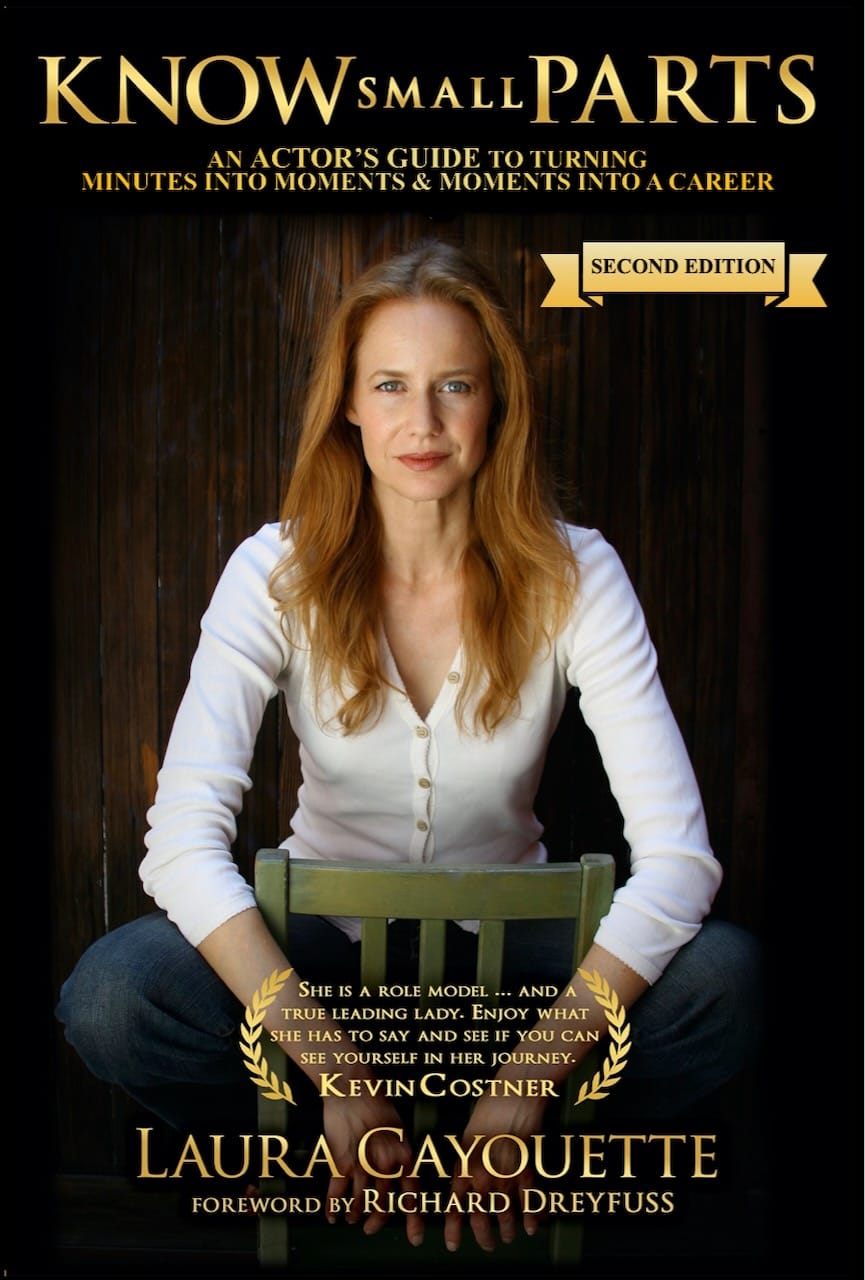
Subscribe to the Know Small Parts Newsletter and get Chapter 2 – Breaking Down the Scene of my book as my gift to you!
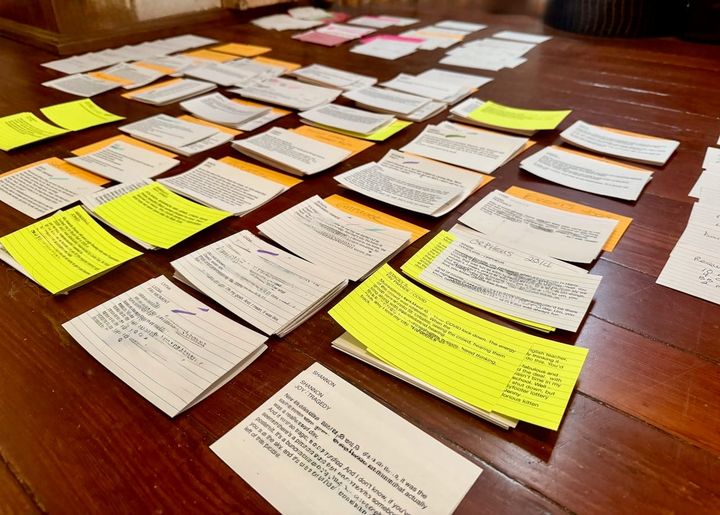
I could blame what happened next on leaving Los Angeles after nearly 18 years and needing time to adjust to life in New Orleans, but the truth is – I couldn't figure out how to turn the film into a book. So I never even opened the box of notes, research books, and index cards. I put it in a kitchen cabinet, telling myself that made it easy to reach when I was ready. Before the pandemic, I moved the box under my bed, telling myself I was "sleeping on it." All the while, I added skills, research, and ideas that would help me finally tackle The Source.
After I was able to successfully plan out a 5-book series with a mystery in each volume and an overall mystery connecting the entire series, I felt ready to take on my 2-book epic adventure spanning continents and eons.
Sometimes a story comes to you before you're ready to write it. If that's what's delaying your project, use the time to explore the idea and your ability to bring it to life. Allow the process to take time.
Ask me!
I invite you to send me your questions. I’ll be selecting some of these questions for future newsletter topics.
Thanks for reading! I hope this inspired you to dare to live your calling.
Please consider becoming a paid subscriber. I love writing for you, and your support ensures I can keep sharing my time and information.
Comments ()