Acting objectives - what's my motivation
I often see actors trying to read their lines out loud with different intonations – thinking they just need to figure out which way each line sounds best. Or worse – how they think casting wants to hear the lines.
Remember that every person auditioning has the same sides/script you do. It’s unlikely that just saying the same words everyone else is saying in different ways will make you stand out in a crowd.
Casting people watch actors doing the same scenes over and over and over. They are looking for signs of life – something interesting. Something “real.” When I’m coaching actors, the single greatest change we can make to take a performance from good to great is to commit to a strong objective.
What’s an Objective?
No one talks for no reason. Even if your character only has one line, they have a reason for saying what they say the way they say it. No matter how small the part or how short the scene, every character has an objective in the scene – something they want.
Your objective has to serve your character
Sometimes we do nice things for people, but we usually have a self-serving reason for our kind deed – and that’s not a bad thing. When you give someone flowers, you may be selfless enough to think your objective is I want to give them a nice gift, but a stronger choice is I want them to like me.
Let’s say the scene is about inviting someone to a concert of their favorite band.
Sample objective: I want them to be happy.
The problem: What does that do for your character?
Your objective has to come from other person
Whether it’s love, money, respect, information, or some other thing – your objective must be something you can get from the other person in the scene. Scenes are always more dynamic when your character has a goal that involves getting something from someone else in the scene.
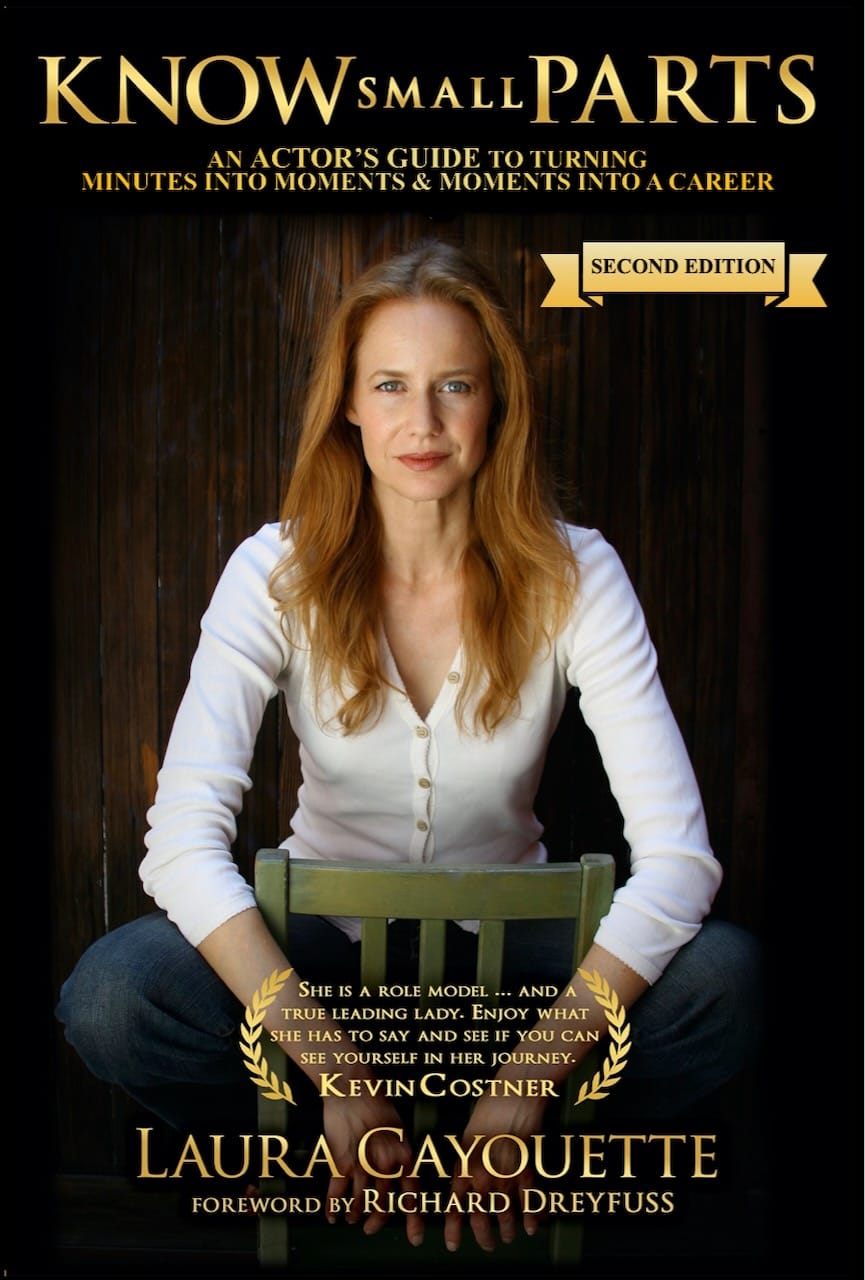
Subscribe to the Know Small Parts Newsletter and get Chapter 2 – Breaking Down the Scene of my book as my gift to you!
Needing the other person makes their character important and necessary. Imagine how different a casting director feels when an actor does all they can to focus on getting their scene’s needs met through them. It can create purpose and intimacy and intensity and that can be unforgettable.
With self-taping, we're usually not reading with casting anymore, but the effect is the same. Casting will see tape after tape of people trying to say the lines different ways with no particular motivation other than "it sounds right." Or cool, or funny, or whatever.
Imagine watching someone want another person to be happy. It might be pleasant, but it's not likely to be very compelling. Now imagine watching the same scene with the actor needing the other person to like them.
The objective should be simple
Acting is about bringing characters to life. The best way to stand out in a crowd of auditioners is to understand the scene from the point of view of your character and commit to a goal – something you want from the other person.
Sample objective: I want them to go with me to the concert.
This is simple, but doesn’t really tell us much about what’s happening in the scene.
Sample objective: I want to go with me to the concert and have a great time so we'll have memories together and they'll want to be with me.
That might all be true but it's overly complicated.
Sample objectives that might work depending on the scene:
- I need them to fall in love with me
- I need them to owe me a favor
- I need them to make my ex jealous
- I need them to feel guilty
- I need them to be seen with me publicly
- I need them to have my back
As I said in my last post - as long as your choices are supported by the script, your imagination is your only limit.
 Laura Cayouette
What if I'm talking to more than one person?
Many scenes feature more than two actors. How do you figure out your scene objective when your dialogue is with more than one person?
What if I only have one line?
You may think you’re off the hook if you’re playing Waiter at a party and your line is, “Your martini, sir.”
Nobody thinks they’re a one-line character in life. We’re just seeing the one moment but every character thinks they are the main character in their life.
Get a subscription to the Writing Unblocked Newsletter and get the Writing Unblocked ebook as my gift to you!
The best objectives are stated in the positive.
Sample objective: I don’t want to stay with them anymore
Positive objective: I want them to break up with me
(I've included MORE VIDEOS with examples BELOW)
Reminders:
Every scene has an objective.
Understand the scene so that you can choose strong objectives.
It’s your job to figure out what your character wants and be specific in your choices.
Subscribers, please enjoy several short videos where I discuss:
- strong objectives
- positive objectives
- choosing the right objective
- choosing the wrong objective